
Timeline at a Glance#
Read in full
The physical economy — the systems that move, shape, and assemble atoms into the built world — is entering its own period of exponential compression. While the cognitive economy has already begun to decouple human effort from output through AI agents, the coming decades will see parallel (and in some cases faster) changes in the cost of producing homes, infrastructure, food, energy, goods, and eventually the raw materials of civilization itself.
This timeline draws on visible 2026 patterns in robotics, additive manufacturing, battery and energy tech, space launch economics, and early AI integration in physical industries, then extends them coherently through the run-up, crossing, and post-singularity phases, consistent with the site's other analyses of the AI transformation and the shape of ordinary life. Later phases incorporate the implications of molecular manufacturing, space resources, and energy abundance discussed in futurist and economic literature on post-scarcity physical systems.
| Period | Key Physical Shifts | Impacts on Jobs and Fields | Impacts on Individuals and Lifestyles | Money, Buying Power, and Access |
|---|---|---|---|---|
| 2026–2030: Early Robotic Automation | Collaborative robots and AI planning enter factories, construction, and logistics at scale. 3D printing moves from prototyping to low-volume production. Energy storage costs continue falling. | Manufacturing and construction: hybrid human-robot teams; routine physical tasks automated; demand rises for robot maintenance, programming, and exception handling. Agriculture and logistics: autonomous vehicles and harvesters begin displacing seasonal labor. | Individuals gain access to cheaper customized goods and faster construction. Job security erodes in repetitive physical roles; new opportunities in overseeing and maintaining automated systems. Early adopters of home 3D printing and small-scale automation see personal production capacity rise. | Capital invests heavily in robotics and energy infra. Disinflation in some manufactured goods; premiums persist for skilled physical craftsmanship and unique/local materials. Buying power improves for mass-produced items but diverges by access to automation tools. |
| 2030–2035: Scaling Additive and Hybrid Production | 3D printing and robotic assembly become standard for buildings, vehicles, and complex goods. Modular nuclear and advanced renewables power dedicated manufacturing clusters. Early orbital test facilities for high-value production. | Construction and manufacturing: small teams or solo operators manage large robotic fleets; traditional trades compress while new roles in design-for-print and system integration emerge. Mining and resources: autonomous equipment reduces on-site human presence. Space industry: launch and assembly jobs shift toward remote oversight. | Rapid, low-cost, customized housing and goods become feasible for more people. Lifestyle shifts toward on-demand physical creation; less reliance on global supply chains for basics. Physical work becomes higher-leverage supervision rather than direct labor. | Compute and energy for physical production become strategic. UBI or distribution pilots address labor displacement. Buying power for built environment and material goods rises sharply for those with access to local automation; scarcity persists in land, unique resources, and human-premium experiences. |
| 2035–2045: Super-Robotic Run-Up and Energy Abundance | Large-scale robotic swarms and AI-directed construction transform infrastructure at city and regional scales. Energy abundance from scaled renewables, advanced fission, and early fusion enables 24/7 high-intensity manufacturing. First economically significant orbital manufacturing. | All physical fields: super-robotic systems handle most execution; humans focus on high-level design, values, safety, and novel problem-solving. New professions in "physical stewards" and robotic ecosystem management. Agriculture and food: vertical and automated systems reduce land and labor needs. | Individuals experience accelerating access to high-quality, customized physical environments and goods. Daily life incorporates more on-site or local production; reduced global dependencies for many items. Purpose in physical domains shifts from survival labor to creative direction and maintenance of complex automated systems. | Energy and advanced robotics become the dominant factors in physical costs. Hyper-deflation in replicable physical goods; premiums for rare materials, human-crafted items, and experiences tied to specific places or people. Wealth and access diverge between automated cores and regions lagging in infrastructure. |
| 2045–2060: Crossing to Physical Post-Scarcity | Molecular manufacturing and advanced robotics make most material goods and structures producible at near-zero marginal cost within the loop. Space resources (asteroids, lunar) begin supplying rare materials at scale. Full energy abundance transforms production economics. | Traditional manufacturing, construction, mining, and much of agriculture: largely automated or subsumed. Human roles center on design, curation of what to build, stewardship of robotic ecosystems, and high-trust oversight in safety-critical or novel contexts. New fields in space-based industry and matter programming. | For those inside the automated abundance loop, access to housing, goods, food, energy, and travel becomes radically expanded. Daily life features high optionality in physical environment; work in physical domains is chosen rather than required for survival. Two-track societies emerge between fully automated abundance zones and communities retaining more traditional or limited physical production. | Traditional wage labor in physical production loses centrality. Experiments in universal material dividends, compute-for-production allocation, and reputation-based access to large-scale builds. Buying power for material basics approaches post-scarcity for the augmented; new scarcities in attention, meaning, unique human physical experiences, and direction of large automated systems. |
| 2060+: Post-Singularity Matter Economy | Molecular and atomic-scale manufacturing, combined with space and stellar resources, makes the physical economy effectively unbounded for material needs within the augmented core. Computronium and large-scale matter reconfiguration become feasible. | All traditional physical production domains: trivial or optional. Active frontiers: stellar engineering, planetary-scale terraforming or habitat construction, consciousness-linked physical systems, and curation of what to create at civilization or cosmic scales. Stewardship of vast automated matter systems is the enduring craft. | Radical material abundance and optionality for the augmented. Individuals choose lifestyles across substrates and scales; some opt for deliberate "small" or biological physical simplicity as philosophy. Daily existence centers on meaning, relationships, creation, and direction of what to build rather than scarcity or labor. The eternal question of what to point god-like physical production capacity toward remains central. | Money and coordination shift to the remaining scarce layer: attention, unique human connection, high-fidelity experiences, and rights to direct large-scale matter and energy projects. Investment in legacy, cosmic expansion, and preservation of "small" physical human life. Buying power for material goods is effectively unlimited; the real economy is one of choice, purpose, and stewardship. |
2026–2030: Early Robotic Automation and Hybrid Physical Work#
Read in full
The patterns are already visible in 2026. Collaborative robots (cobots) and AI for task planning, quality control, and logistics optimization are moving from pilots to standard deployment in manufacturing, warehousing, and some construction sites. Additive manufacturing (3D printing) is transitioning from rapid prototyping to production of end-use parts in aerospace, medical devices, and automotive, with polymer and metal systems scaling. Battery and energy costs continue their multi-year decline, supporting more electrified and localized production.
Displacement and augmentation are both real. Routine, repetitive, or dangerous physical tasks (welding, painting, heavy lifting, excavation, harvesting) are increasingly handled by machines, while humans move into supervision, programming, maintenance, and exception handling. Historical analogies from previous automation waves suggest a lag between capability and full deployment, but AI acceleration is compressing that timeline.
 View in GalleryEarly robotic factory automation, 2028
Fields in this phase:
- Manufacturing: hybrid lines where robots handle precision and repetitive assembly; humans focus on design iteration, quality oversight, and rapid reconfiguration for new products. Small-batch and customized production becomes economically viable.
- Construction: robotic bricklayers, 3D-printed components, and autonomous heavy equipment reduce on-site labor needs; small teams or even individuals can manage projects that once required large crews.
- Agriculture and food: autonomous tractors, harvesters, and vertical farming systems begin displacing seasonal and routine labor; precision agriculture optimizes inputs.
- Mining and resources: autonomous haul trucks and drills reduce human exposure in hazardous environments; remote operation centers emerge.
- Logistics and transportation: autonomous vehicles and drones handle routine movement; humans manage complex routing, customer exceptions, and system maintenance.
Jobs and individuals: Physical jobs in repetitive or dangerous roles see compression; demand rises for robot technicians, systems integrators, and "physical AI" designers who can translate human intent into reliable machine behavior in unstructured environments. For individuals, access to customized physical goods and faster, lower-cost construction improves. Lifestyle shifts include more on-demand or local production (home or community 3D printing for repairs and small items). Job security concerns rise for those in traditional trades without adaptation; new opportunities open in overseeing and maintaining the automated layer. Buying power for mass-produced and semi-custom physical items rises, while premiums persist for highly skilled human craftsmanship and unique materials.
Money and broader effects: Capital flows heavily into robotics platforms, sensors, energy storage, and software for physical coordination. Early deflation appears in some categories of manufactured goods and components as automation scales. UBI or wage subsidy pilots begin in regions with rapid physical automation adoption. The gap between automated and non-automated physical production creates regional and skill-based divergences in economic outcomes.
2030–2035: Scaling Additive Manufacturing and Energy Shifts#
Read in full
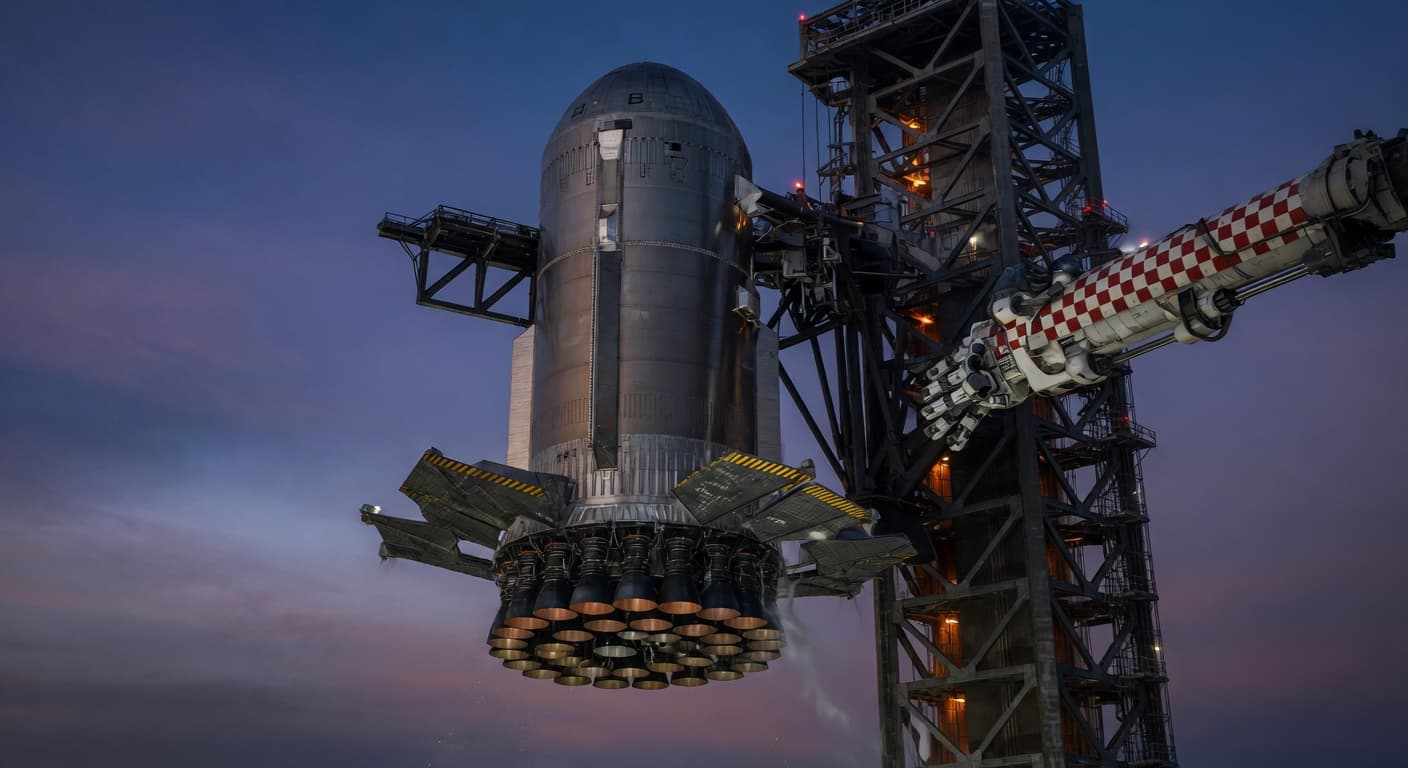
By the early 2030s, additive manufacturing (3D printing in polymers, metals, and composites) combined with robotic assembly and AI-driven design optimization moves from niche to standard practice in many sectors. Buildings are increasingly printed or assembled from printed modules on-site or in factories. Vehicles, medical devices, and consumer goods see higher volumes of end-use additive production. Energy infrastructure (advanced batteries, modular nuclear, improved renewables) supports 24/7 high-intensity manufacturing clusters with lower marginal energy costs.
The economic effects on physical production accelerate. Small teams or even individuals can now produce or direct production of items that once required large factories or crews. Supply chains shorten for many goods as local or on-demand production becomes viable. Early orbital and high-altitude platforms test in-space manufacturing for ultra-high-value or microgravity-optimized items.
 View in GalleryOrbital manufacturing test facility, 2035
 View in GalleryRobotic 3D printed construction, 2035
Fields in this phase:
- Construction and infrastructure: 3D-printed homes and components, robotic bricklayers and excavators, and modular assembly reduce on-site labor dramatically; small crews or remote oversight manage projects that once needed hundreds.
- Manufacturing: hybrid additive-subtractive-robotic lines enable mass customization and rapid iteration; traditional mass production of standardized items faces competition from distributed, on-demand systems.
- Agriculture and food: automated vertical farms, precision robotic harvesting, and cultured meat facilities scale; land and seasonal labor requirements drop significantly.
- Energy and resources: autonomous mining and drilling equipment, robotic maintenance of renewable installations, and early in-space resource processing reduce human exposure and increase throughput.
- Logistics: autonomous last-mile and heavy-haul systems integrate with robotic warehousing; humans focus on exception handling, system design, and high-value coordination.
Jobs and individuals: Physical jobs see continued compression in routine execution roles, with rising demand for "automation integrators," robotic fleet managers, design-for-additive specialists, and safety/ethics overseers in human-adjacent physical systems. For individuals, customized, lower-cost housing and goods become more accessible; personal or community-scale production tools (advanced desktop and small industrial printers, home energy systems) increase self-reliance for repairs and small items. Lifestyle incorporates more on-demand or localized physical creation, reducing dependence on distant supply chains for many basics. Purpose in physical domains shifts toward creative direction and stewardship of complex automated ecosystems rather than direct labor.
Money and broader effects: Capital continues flowing into robotics platforms, advanced materials, energy storage, and software for physical coordination. Deflation accelerates in categories of goods and structures amenable to additive/automated production. UBI or material dividend pilots expand in regions with rapid physical automation. Regional divergences widen between areas with strong automation/energy infrastructure and those lagging. Buying power for built environment and many material goods rises for those with access; premiums remain for rare materials, highly customized human-premium items, and experiences tied to specific places or skilled human craft.
2035–2045: Super-Robotic Run-Up and Infrastructure Abundance#
Read in full
The systems now handle city-scale and regional infrastructure projects with robotic swarms, autonomous heavy equipment, and AI for coordination that outpaces traditional project management. 3D printing and modular robotic assembly become default for large structures. Energy from scaled renewables, factory-produced advanced fission (including thorium and micro-reactors), and early fusion demonstrations powers continuous, high-throughput manufacturing clusters with dramatically lower marginal energy costs. The first economically significant orbital manufacturing platforms come online for high-value items (pharmaceuticals, advanced materials, electronics) that benefit from microgravity or vacuum.
Physical production capacity scales in ways previously requiring entire industrial civilizations. Small human teams or remote operators direct projects that once needed thousands on site. Supply chains for many material goods shorten or localize as on-demand and distributed production becomes dominant.
 View in GallerySuper-robotic urban transformation, 2050s
Fields in this phase:
- Construction and infrastructure: robotic swarms and large-scale 3D printing build or retrofit cities, bridges, and utilities at speeds and costs that transform urban development; humans focus on high-level design, values, safety, and integration with existing human-scale environments.
- Manufacturing: super-robotic lines with integrated additive, subtractive, and assembly capabilities enable near-real-time response to demand; traditional centralized mass production faces intense competition from distributed and customized systems.
- Agriculture and food: fully automated vertical, robotic, and cultured systems produce the majority of calories and nutrients with minimal human labor; land use for traditional farming declines sharply in automated regions.
- Mining, resources, and energy: autonomous and robotic systems dominate extraction and processing; human roles shift to remote oversight, ecosystem management, and high-level resource strategy.
- Logistics and space: autonomous global and orbital logistics networks handle routine movement; humans manage complex exceptions and the growing space-based physical economy.
Jobs and individuals: Traditional execution roles in physical trades see severe compression. Demand surges for "physical stewards," robotic ecosystem designers, matter-flow optimizers, and high-trust oversight in safety-critical or novel physical contexts. For individuals, access to high-quality, customized physical environments (housing, infrastructure, goods) accelerates in automated regions. Daily life features more on-site or localized production and repair; reduced global dependencies for many material needs. Lifestyle shifts toward higher optionality in physical surroundings and more time directed toward creative or supervisory roles rather than direct labor. Purpose questions intensify for those whose traditional physical work has been automated.
Money and broader effects: Energy and advanced robotics platforms become the dominant cost and strategic factors in physical production. Hyper-deflation occurs in replicable physical goods and structures. Premiums explode for rare materials, highly customized or human-premium physical items, and experiences tied to specific places or skilled human presence. UBI or universal material access experiments scale. Regional and skill-based divergences in physical abundance become stark political issues. Buying power for built environment and material goods rises dramatically for those in automated cores; lags elsewhere create new forms of inequality.
2045–2060: Crossing to Physical Post-Scarcity#
Read in full
This is the hinge decade for the physical economy. Molecular manufacturing (atomically precise or near-precise assembly) combined with super-robotic systems and AI for matter-flow optimization makes most physical goods, components, and even complex structures producible at near-zero marginal cost for those inside the automated abundance loop. Asteroid, lunar, and other space resources begin supplying rare and strategic materials at industrial scales, reducing terrestrial extraction pressures. Energy abundance from scaled advanced fission, early fusion, orbital solar, and other sources powers continuous, high-intensity physical production with transformative economics.
Traditional constraints on what can be built, where, and at what cost largely dissolve within the core. Supply chains for many material goods become local or on-demand. Global trade in raw materials and basic manufactured items shrinks for automated regions.
 View in GalleryPhysical abundance lifestyle, 2070s
Fields:
- All traditional manufacturing, construction, mining, and much of agriculture: largely automated or subsumed by molecular and robotic systems. Human roles center on high-level design, curation of what to create, stewardship of robotic/molecular ecosystems, and high-trust oversight in novel or safety-critical contexts.
- New frontiers emerge in space-based industry (orbital and lunar manufacturing, asteroid processing) and matter programming (designing materials and structures at the molecular level for specific performance).
- Logistics and energy: autonomous global and orbital networks handle routine movement and power distribution; humans manage complex exceptions and strategic direction.
Jobs and individuals: Execution roles in physical production become largely optional or chosen. Demand grows for designers of physical systems, curators of what to build at scale, stewards of automated matter ecosystems, and high-trust roles in safety, ethics, and integration with human values. For individuals inside the loop, access to housing, goods, food, energy, infrastructure, and travel becomes radically expanded and often on-demand or localized. Daily life features high optionality in physical environment and possessions; reduced labor requirements for material needs. Lifestyle shifts toward creative direction, personal projects, and stewardship rather than survival or traditional work in the physical domain. Two-track societies emerge between fully automated abundance zones and communities retaining more traditional or limited physical production methods.
Money and broader effects: Traditional wage labor in physical production loses centrality. Experiments in universal material dividends, compute or energy allocation for production, and reputation-based access to large-scale builds appear. Hyper-deflation in replicable physical goods and structures; premiums for rare/unique materials, highly customized or human-premium physical items, and experiences tied to specific places or human presence. Buying power for material basics and built environment approaches post-scarcity for the augmented; new inequalities center on access to the automated loop and direction of large physical production capacity.
2060+: Post-Singularity Matter Economy#
Read in full
By the 2060s and beyond, for populations inside the augmented core, the classic constraints on physical production — labor, materials, energy, and precision — have largely dissolved for material goods, structures, infrastructure, food, and most forms of matter shaping. Molecular and near-atomic scale manufacturing, combined with space and stellar resources (asteroids, lunar regolith processed at scale, eventually stellar material), makes the physical economy effectively unbounded for most material needs. Computronium (matter reconfigured for computation) and large-scale matter reconfiguration become feasible engineering domains. Energy abundance powers continuous, god-like physical production capacity.
Traditional physical production domains become trivial or optional. The active frontiers are stellar engineering, planetary-scale habitat or terraforming projects, consciousness-linked physical systems, and the curation of what to create at civilization or cosmic scales. Stewardship of vast automated matter and energy systems is the enduring human craft in the physical domain.
 View in GalleryMolecular and stellar physical economy, 2120s+
Fields:
- All traditional manufacturing, construction, mining, agriculture, and logistics: trivial or optional within the loop.
- Active frontiers: stellar engineering (Dyson swarms, star-lifting, matter reconfiguration at cosmic scales), planetary-scale projects, advanced habitats, and matter programming for unprecedented performance.
- New coordination challenges in allocating large-scale matter, energy, and computational resources for physical projects.
Jobs and individuals: Execution in physical production is largely optional or chosen. Demand centers on designers and curators of what to build at scale, stewards of automated matter ecosystems, and high-trust roles in safety, ethics, values, and integration with human (or post-human) meaning. For individuals inside the loop, material optionality is radical: housing, goods, food, energy, travel, and physical environments are effectively on-demand or locally producible at high quality. Daily life centers on choice, creativity, relationships, and direction of what to create rather than scarcity or labor. Some opt for deliberate "small" or biological physical simplicity as philosophy or aesthetic choice, preserving the texture of limited physical existence against god-like production capacity. Lifestyle shifts to high optionality in physical reality; purpose must be actively created rather than supplied by necessity.
Money and broader effects: Traditional wage labor in physical production has no centrality. Coordination mechanisms shift to the remaining scarce layer: attention, unique human connection, high-fidelity experiences, rights to direct large-scale matter/energy projects, and meaning/legacy in what is built. Investment flows to cosmic expansion, legacy physical artifacts, and preservation of "small" human-scale physical life. Buying power for material goods and built environment is effectively unlimited for the augmented; the real economy is one of choice, purpose, and stewardship of what to point god-like physical production capacity toward. The eternal problem of directing incomprehensible matter and energy systems toward human-meaningful ends remains the core craft.