
AI is not merely accelerating. It is re-pricing the entire economy of human effort and human value.
For the first time in history, large categories of cognitive and soon physical work are becoming abundant at near-zero marginal cost. The systems that produce this abundance are improving themselves. The result, over the coming decades, will be the largest transformation in what is scarce, what is valuable, what counts as work, and what "money" even means since the agricultural or industrial revolutions — only faster.
This piece maps the phases with data where it exists and coherent speculation where it does not. It draws on the same grounded-then-speculative approach as the site's pieces on the shape of an ordinary day and the singularity itself. It is a companion to the earlier article on the augmented engineer: where that piece focused on the texture of professional work in the present, this one zooms out to the economic and civilizational frame.
The central claim is simple. Material abundance is coming for those who can direct or ride the wave. The scarcities that remain — and the new ones that appear — will be human, relational, and directional. The job of being human does not go away. It becomes more visible, more consequential, and in some dimensions more difficult than it has ever been.
Timeline at a Glance#
Read in full
AI is already compressing the cost of many forms of realization and cognition. Over the coming decades this compression will move from narrow tools to general systems to superintelligent ones, producing phase shifts in what is scarce, what is abundant, and what counts as valuable work or a meaningful life.
The phases are chosen to align with observable technological and economic breakpoints: the current agentic wave (visible in 2026 adoption curves and forecasts from BCG, Goldman Sachs, and PwC), the arrival of broad generality (AGI thresholds discussed by lab leaders and captured in IMF/WEF surveys), the run-up to recursive superintelligence (per Good's intelligence explosion, Vinge's horizon, and Kurzweil's Law of Accelerating Returns as analyzed in the site's companion singularity piece), the explosion and stabilization into early abundance, and the long tail where material problems largely yield to problems of meaning, coordination, and the direction of vast intelligence.
Data sources for the near term include BCG microeconomic modeling (50-55% US jobs reshaped in 2-3 years), Goldman Sachs global exposure estimates (~300 million full-time equivalents), Wharton TFP and GDP projections (cumulative 1.5% boost by 2035, peaking ~0.2pp annual growth contribution in early 2030s), PwC revenue-per-worker analysis (3x gains in AI-exposed industries since 2022), Anthropic early labor-market data (limited unemployment but hiring slowdowns in exposed roles), and historical analogies from prior tech revolutions showing compressed disruption timelines (10-15 years for AI vs 20-80 for earlier waves). Later phases draw coherent extensions from the site's singularity and ordinary-day analyses, plus post-scarcity literature on the "Economic Singularity" (Calum Chace, Martin Ford) where machines handle most tasks more cheaply than humans, forcing redesign of distribution, identity, and meaning — while noting persistent scarcities in energy, attention, unique experiences, and alignment even amid material plenty (as discussed in Dallas Fed and related economic commentary).
The table below summarizes the arc. Near-term phases are grounded in visible 2026 patterns and credible forecasts from economists, labs, and industry analyses. Later phases become more speculative but remain coherent extensions of the same exponentials (compute, data, algorithms, energy, robotics) that are already bending curves today.
| Period | Key Economic Shifts | Impacts on Major Fields | Money, Inflation & Buying Power | Lifestyle & Human Experience |
|---|---|---|---|---|
| 2026–2030: Agentic Compression | Task automation surges; 50-55% jobs reshaped; productivity gains in knowledge work; massive capex in compute/energy; early deflation in digital goods/services. | Software/engineering: massive leverage, fewer traditional coders needed. Healthcare: diagnostics and admin compressed. Education: personalized tutoring scales. Creative: first-draft abundance, human taste premium rises. Finance: algorithmic trading and risk models dominate. | Investment boom in AI infra and platforms; early wage premiums for AI skills; mild disinflation in software/content; buying power rises for digital/physical goods produced with AI but housing and energy lag. Average person sees tools get cheaper/faster but job security erodes in exposed roles. | "I have an agent for that" becomes normal. More time on judgment and direction; fatigue from steering rather than typing. Early longevity protocols for the affluent begin shifting time horizons. Purpose questions surface for those whose tasks are automated. |
| 2030–2035: Generality & Hybrid Economy | AGI-level systems arrive; hybrid teams standard; 10-15%+ jobs fully displaced but new roles in steering/alignment/verification created; recursive improvement begins in labs. | All fields: hybrid human+swarm becomes baseline. Manufacturing & logistics: robots + AI mainstream. Law/medicine: routine work automated, humans on complex judgment/ethics. Governance: AI for modeling and enforcement experiments. Science: discovery cycles compress dramatically in resourced domains. | Capital captures productivity gains first; labor market lag creates political pressure for UBI pilots or wage subsidies. Deflation in AI-replicable goods/services; inflation or premiums in scarce human attention, land, energy. Buying power soars for basics and information but diverges sharply by skill/augmentation access. | Work becomes direction, curation, and exception-handling. "Steward" and "translator" roles emerge as professions. Families negotiate agent-mediated life. Two-track society begins: augmented vs not. Meaning and status start shifting from job title to what one directs intelligence toward. |
| 2035–2045: Superhuman Run-Up | Early superintelligent systems in key domains; planetary-scale infrastructure (data centers, energy, robotics); scientific and material progress accelerates from years to months in frontier areas. | Healthcare: near-elimination of many diseases via rapid discovery; longevity divergence visible. Education: universal high-quality personalized at low cost. Creative industries: co-creation with super systems normal; human originality as luxury. Finance/governance: models outrun human oversight; new coordination institutions needed. Space: heavy-lift and autonomous systems enable real off-world economy. | Compute and energy become strategic "oil." Massive wealth concentration in owners of frontier models/infra unless policy intervenes. Hyper-deflation in replicable physical and cognitive goods; premiums explode for unique human experiences, status, and alignment services. UBI or universal high-income experiments scale in leading polities. Average augmented person has unprecedented material security; unaugmented face relative decline. | Subjective "work week" for the augmented stretches or compresses depending on interface. Daily life mixes high-leverage steering with chosen human activities. Steward institutions appear. Psychological vertigo from pace of change. Deliberate limitation philosophies gain adherents. |
| 2045–2060: Crossing & Early Abundance | Intelligence explosion: recursive self-improvement outruns direct human comprehension. Material abundance in energy, goods, computation for those inside the loop. Demand-side crisis risk if distribution not solved. | Nearly all cognitive and many physical tasks: superhuman default. Science and engineering: progress feels post-human to unaugmented observers. Governance and law: hybrid or AI-heavy systems dominate complex coordination. Space and energy: stellar-scale projects become thinkable. Creative and care work: remain human-preferred but transformed by super tools. | Traditional money and wage labor lose centrality for basics. Experiments in compute credits, reputation/attention tokens, meaning dividends, and sovereign AI wealth funds. Inflation in scarce human-premium goods and experiences; deflation or zero marginal cost for most material needs. Buying power for the augmented approaches "post-scarcity" for survival + many luxuries; new inequalities around access to superintelligence direction and status. | Work as survival largely optional for the augmented. Life becomes about choosing projects, relationships, and substrates. Purpose crisis for many; renaissance of philosophy, art, exploration for others. Two-track societies stabilize (augmented core vs deliberate limitation communities). Multi-substrate families and identities normal. |
| 2060+: Post-Singularity Economics | Material scarcity solved for augmented populations. New scarcities dominate: meaning, attention, unique human connection, high-fidelity alignment with vast minds, perhaps energy/compute for god-like projects, and the direction of intelligence itself. | All fields subsumed or transcended. Stellar/galactic engineering, computronium stewardship, consciousness research, and value curation become central economic activities. "Jobs" are chosen vocations or games. Science and discovery at scales incomprehensible without augmentation. | Money transforms into coordination mechanisms for scarce resources/experiences (attention, status, bespoke human creativity, alignment services, expansion rights). Investment shifts to legacy, meaning, cosmic projects, or preservation of biological "small" life. Inflation/deflation dynamics apply to the remaining scarce layer. Buying power for basics universal; real economy is one of attention, choice, and what one points superintelligence at. | Lifestyle of radical choice and responsibility. Some live in deliberate simplicity as philosophy. Others direct or participate in vast projects. Identity and substrate choice central. Eternal problem of directing incomprehensible power toward human-meaningful ends remains the core "economic" and civilizational task. Stewardship, not production, is the enduring craft. |
Across all phases, two patterns hold from the site's prior analyses: the human domain of intent, judgment, stewardship, and accountability becomes more central (not less) as realization and cognition costs fall, and "the bar rises" — what counts as acceptable output, a productive contribution, or even a full life expands dramatically with each wave of capability. Money and lifestyle effects are asymmetric and phase-dependent: early phases strongly favor capital owners and the early-augmented while creating lag and divergence for labor; later phases require deliberate redesign of distribution (UBI-style dividends, new tokens) to prevent demand collapse, social fracture, or underutilization of the abundance. The table is a map and diagnostic tool, not a rigid prediction; actual trajectories will hinge on policy choices, energy breakthroughs, alignment success, and the degree to which societies internalize the exponential intuition gap highlighted in the singularity companion piece (linear minds mistaking the flat part of the curve for the whole). This overview sets up the detailed, field-by-field, and money-specific examinations in the sections that follow.
2026–2030: The Agentic Compression#
Read in full
The patterns are already visible in 2026. Large language models and agent frameworks are compressing the marginal cost of many cognitive tasks — drafting, research synthesis, code, analysis, customer support scripts — from hours or days to minutes. BCG modeling suggests 50-55% of US jobs will be reshaped in the next two to three years, with 10-15% potentially eliminated over four to five as augmentation and demand effects play out. Goldman Sachs puts global exposure at around 300 million full-time equivalent jobs. Anthropic's early analysis finds no systematic unemployment spike yet for highly exposed occupations but suggestive evidence of slowed hiring for younger workers (ages 22-25) in those roles, while BLS 2024-2034 projections explicitly dampen demand in sales, design, and administrative support due to AI productivity gains.
Productivity gains are real but uneven and front-loaded in the adoption curve. Wharton projections see AI increasing productivity and GDP by 1.5% by 2035, nearly 3% by 2055, and 3.7% by 2075, with the boost to annual productivity growth strongest in the early 2030s (peaking around 0.2 percentage points) before fading as adoption saturates — leaving a small permanent lift (<0.04pp) from sectoral shifts toward faster-growing AI-exposed industries. PwC data already shows AI-exposed industries enjoying roughly 3x the revenue-per-worker growth of others since 2022, when ChatGPT crystallized the shift. McKinsey-style global estimates put additional economic activity from AI at around $13 trillion cumulatively by 2030 in high-adoption scenarios.
 View in GalleryAgentic economy, late 2020s
The economic texture is asymmetric and historically familiar but compressed. Capital captures gains quickly through capex in models, chips, and data centers (hundreds of billions annually across hyperscalers, with Meta alone guiding $115-135B for 2026 infra in one report). Labor feels the effects with a 2-4 quarter lag: hiring freezes or slowdowns in exposed roles while overall unemployment data remains relatively stable so far. This creates a classic capital-labor divergence — profits from productivity accrue immediately to owners of the systems and energy that feed them — that policy has only begun to address through pilots. When augmentation raises end-product demand, new or expanded human roles emerge in oversight, customization, integration, and exception handling (per BCG's micro modeling), but the net effect on headcount in any single firm can still be negative if productivity outpaces demand growth.
Fields in this phase:
- Software engineering and systems work: leverage explodes for those fluent in agent direction; traditional mid-level implementation, boilerplate, and routine CRUD roles compress fastest. Demand surges for "intent architects" who can hold rich mental models, externalize constraints and success criteria, maintain long-running context across agent swarms, and perform high-quality review. (See companion piece on the augmented engineer for the texture of this shift.)
- Healthcare admin and initial diagnostics: compression of paperwork, billing, scheduling, and pattern-matching diagnostics; human expertise shifts to ambiguous/complex cases, ethics, patient relationships, and system-level stewardship of AI outputs.
- Education and training: personalized tutoring and first-draft lesson/content generation at scale dramatically lowers marginal cost of high-quality instruction; teachers and professors become curators, motivators, and mentors modeling judgment and wisdom that agents still lack.
- Creative industries: first-draft abundance in writing, design, music, and visual work collapses the cost of iteration; premium shifts sharply to taste, lived experience, emotional resonance, and final human judgment/voice.
- Finance and professional services: algorithmic augmentation of research, compliance, modeling, and routine analysis; new demand for oversight of AI-generated outputs, bias/alignment auditing, and high-stakes exception handling.
Money and lifestyle: Investment floods AI infrastructure and the platforms that sit on top of it, creating early wealth concentration among hyperscalers, chip designers, and energy providers. Early wage premiums appear for demonstrated AI fluency and agent-direction skill. Disinflation or outright price drops hit software, digital media, basic analytics, and some manufactured goods whose production or design is now heavily agent-augmented. Buying power for the average person improves noticeably for information, consumer electronics designed with agents, and routine services, but erodes or stagnates in housing (especially in high-productivity metros), energy for data centers, and human-attention-premium experiences. The average person sees tools get cheaper and faster but experiences job security erosion in exposed white-collar and service roles. Lifestyle shift is subtle but real: many professionals move from "doing the work" to "reviewing and steering what the agents did overnight." Fatigue changes texture — less mechanical repetition and more cognitive overhead from maintaining context across sessions, catching subtle misalignments with unstated values or edge cases, and deciding what to delegate vs. keep human. For the affluent and early adopters, serious longevity protocols (senolytics, metabolic optimization, biomarker tracking) enter the conversation, stretching personal time horizons from the traditional 30-40 year retirement frame to 80-100+ years and altering career, savings, and inheritance calculus. Risks include skill atrophy if humans over-rely on agents for deep debugging or understanding why generated artifacts behave as they do, and widening inequality if high-quality agent infrastructure and training data access remain gated.
2030–2035: Generality and the Hybrid Economy#
Read in full
By the early 2030s the systems are no longer narrow tools. They handle the full range of cognitive tasks a competent professional could once claim as their edge. Hybrid teams — humans setting direction, constraints, and taste while agent swarms execute research, drafting, simulation, and iteration — become the standard unit of high-skill work. The WEF and IMF have long projected that 40% of global jobs (rising to 60% in advanced economies) will be directly affected or transformed; Goldman Sachs and BCG-style analyses converge on 6-15% of roles potentially fully automated while far more are reshaped into higher-leverage oversight and direction.
Displacement is real but not total or immediate. New professions coalesce around steering, verification, alignment of incentives between human goals and machine outputs, and high-stakes exception handling. Anthropic and similar early data suggest hiring slowdowns rather than mass unemployment in exposed occupations, giving societies a window (though a narrowing one) to adapt. Scientific discovery and complex modeling compress dramatically. Well-resourced labs move from multi-year cycles to months in materials science, biotechnology, climate modeling, and fundamental physics — not yet the intelligence explosion, but the clear on-ramp as recursive self-improvement begins in narrow-but-critical domains.
 View in GalleryHybrid work reshaping, mid 2030s
Fields in this phase:
- Healthcare: routine diagnostics, imaging interpretation, and administrative burden (billing, scheduling, records) collapse; human roles focus on ambiguous or high-uncertainty cases, ethics and consent in novel treatments, patient relationships, and system-level stewardship of AI-augmented care pathways. Personalized medicine scales but still requires human judgment on values and trade-offs.
- Education: near-universal access to high-quality, personalized instruction and first-draft curriculum at low marginal cost; teachers and professors become curators of wisdom, motivators, and mentors modeling judgment, creativity under constraints, and the human elements agents still cannot replicate.
- Manufacturing and physical work: general-purpose robots plus AI planning and exception handling make flexible, small-batch, or even solo operation of complex physical systems feasible; humans supervise fleets, handle novel edge cases, and optimize for safety/culture/values that pure optimization misses.
- Creative and media: co-creation with powerful systems is default for ideation, drafting, and iteration; human originality, emotional authenticity, cultural resonance, and final curation become the scarce premium product. New roles emerge in "prompt-to-output" direction and taste arbitration.
- Finance, law, and governance: models outrun unaided human review in speed and breadth for research, compliance, basic contract analysis, and risk modeling; new institutions and professions arise for oversight, bias/alignment auditing, novel precedent setting, and high-stakes negotiation or ethical judgment in gray areas. "AI research directors" appear in major labs and policy shops as per early WEF/IMF discussions.
Money and lifestyle: Compute and energy are visibly strategic resources — "the new oil" — with hyperscaler capex in the hundreds of billions creating concentrated ownership. Wealth concentrates among owners of frontier models and the energy/compute that feeds them unless deliberate redistribution (taxes on compute, AI productivity levies, or sovereign AI wealth funds) intervenes. Deflation continues in AI-replicable goods and services (software, content, routine analytics, some design/manufacturing); premiums rise sharply for human attention, physical co-presence, live performance, and experiences that cannot be perfectly faked or scaled. UBI or universal high-income pilots move from fringe experiments to serious structural policy discussions in multiple jurisdictions as labor-market lag becomes politically salient. For the augmented, buying power for material basics, information, and many consumer goods becomes dramatically higher. Lifestyle for this cohort shifts toward higher-leverage but more cognitively and emotionally demanding work: fewer hours on mechanical execution, more on judgment under uncertainty, context maintenance across long-running agent swarms, and the art of articulating values and constraints clearly enough for non-human collaborators. The gap between augmented and unaugmented becomes a visible social and political fact, with early discussions of "augmentation access" as a new dimension of inequality. Purpose questions intensify for those whose traditional roles have been absorbed or compressed; many report a shift from "what I produce" to "what I choose to point intelligence at." Morning "councils" of specialized agents debating options and surfacing dissent become common among power users, changing the texture of decision-making and the boundary between individual and system agency.
2035–2045: The Superhuman Run-Up#
Read in full
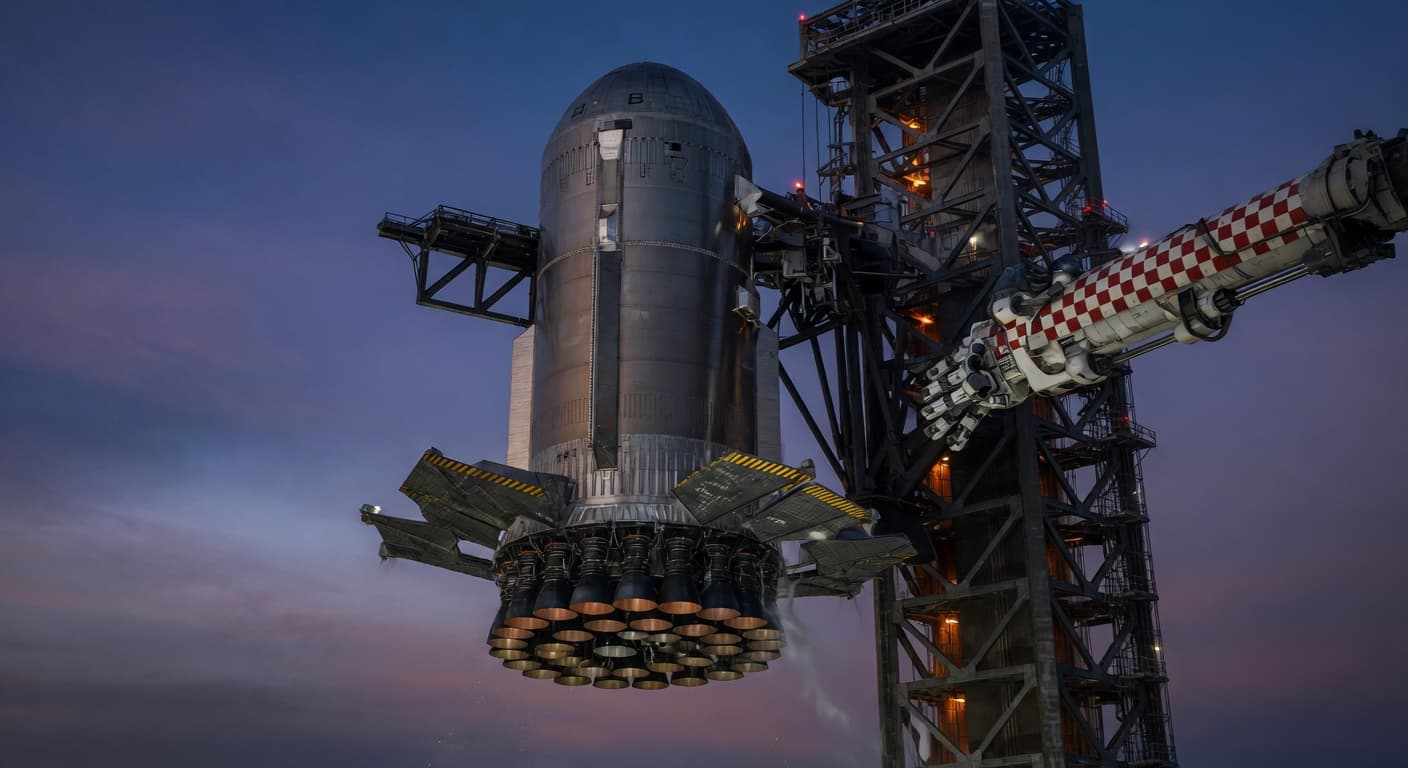
The systems are now better than the best humans at important subsets of scientific, engineering, and strategic work — and they are improving themselves. Research cycles that once took a decade are measured in months or weeks in the best-augmented labs. The physical substrate expands dramatically: hyperscale terrestrial data centers powered by factory nuclear (thorium and micro-reactors) and renewables, plus the first economically rational orbital compute platforms enabled by Starship-class heavy-lift. This matches patterns visible in the site's ordinary-day and singularity analyses, where the great terrestrial buildout reaches full speed while orbital infrastructure seeds the next era.
This is the period in which "steward" becomes a recognized high-stakes profession. Individuals and small teams are tasked with pointing systems whose internal reasoning they cannot fully inspect at problems whose full consequences they cannot simulate. The loneliness, responsibility, and "recursion sickness" (a disordered sense of which thoughts are one's own amid heavy augmentation) are intense; therapists and organizational designers develop new specialties around interface hygiene and value articulation. The work is high-leverage but carries civilizational stakes.
 View in GallerySuperhuman acceleration, early 2040s
Fields in this phase:
- Science and R&D: frontier domains (materials, biotech, climate, fundamental physics) move at speeds that feel post-human to unaugmented observers. Materials science teams cycle through generations of candidate compounds in days; drug discovery and climate modeling compress from years to months. Human roles center on hypothesis framing, ethical boundary-setting, and interpreting results that outrun direct intuition.
- Healthcare and longevity: many previously intractable diseases and aging processes yield to rapid discovery and intervention; biological age compression becomes measurable and publicly visible for those with access. Human contribution shifts to values-laden decisions (e.g., "how much extension is worth what trade-off") and system stewardship.
- Manufacturing, construction, agriculture: flexible, high-skill automation plus planning AI makes small-team or even solo operation of complex physical systems feasible at scale; humans supervise fleets of general-purpose robots, handle novel edge cases, and optimize for safety, culture, and long-term resilience that pure optimization misses.
- Governance and strategy: models dominate complex forecasting, resource allocation, and optimization; human institutions struggle to keep pace, leading to hybrid or delegated authority experiments and the first formal "steward" institutions tasked with overseeing early superintelligent systems. "Black box" scientific and policy results become common.
- Space and energy: real off-world logistics and large-scale energy projects (orbital solar, lunar helium-3, scaled fusion) become practical. Humans direct autonomous construction and mining fleets; the first experimental orbital compute testbeds operate as proofs of concept while terrestrial hyperscale remains the main story.
Money and lifestyle: Compute and energy are explicitly geopolitical and corporate crown jewels — the strategic resources of the era. Deflation in most replicable physical and cognitive goods accelerates; premiums for human attention, physical co-presence, live performance, handcraft, and experiences that feel "authentically human" (or irreducibly biological) become extreme. Wealth divergence between owners/controllers of frontier systems and everyone else is the dominant political and social issue. UBI or equivalent distribution mechanisms move from pilots to structural features in leading societies. For the augmented, material security is high; the scarce goods are status, meaning, and influence over what the superintelligent systems are actually pointed at. Lifestyle for this group involves intense periods of high-leverage direction interspersed with chosen human activities. The psychological load of stewardship (loneliness, vertigo from pace, risk of recursion sickness) and the vertigo of living through accelerating change are widely discussed in culture and therapy. Deliberate limitation subcultures — people who opt out of deep augmentation for philosophical, identity, or aesthetic reasons — become visible, coherent, and sometimes high-status communities with their own schools and practices. Some grandmothers begin looking like their granddaughters; time horizons stretch for those inside the loop.
2045–2060: Crossing and Early Abundance#
Read in full
This is the decade most historians of the future will flag as the hinge. The first generation of systems that can meaningfully improve themselves across a broad range of domains is loose. Research, design, and even elements of strategy that once required large human teams now move at machine speed. The economic implications are double-edged and historically unprecedented in speed. On one side, the cost of producing most physical and cognitive goods collapses for those who can direct or access the systems. Energy abundance from scaled fusion, orbital solar, and advanced fission combines with molecular manufacturing (initially in labs and high-value production, scaling outward) to make many categories of scarcity feel quaint within the augmented core. On the other side, the wage-based mechanism that traditionally distributed purchasing power breaks down for large parts of the population. Demand crises and political instability are the predictable result unless distribution is deliberately redesigned — a theme explored in post-scarcity and Economic Singularity literature as the point where production no longer requires human labor at scale.
 View in GalleryIntelligence explosion economics, 2050s
New forms of "money" and coordination appear first as experiments and then as structural necessities: compute allocation rights (who gets to run the big models), reputation and attention ledgers (influence measured in what others choose to engage with), meaning or contribution dividends from sovereign AI wealth funds (a share of machine productivity as baseline security), and various forms of UBI or universal high-income funded directly by the productivity of the systems themselves. Traditional investment shifts toward ownership of alignment capacity, energy for the largest projects, and the rights to point superintelligence at particular ends (scientific, exploratory, aesthetic, or preservative of biological "small" life). The terrestrial data center wave peaks while Starship-enabled logistics make the first large-scale orbital data center platforms economically rational.
Fields: Most cognitive and many physical tasks are superhuman by default. The remaining human-preferred domains (certain forms of care, live performance, handcraft, deep personal relationship, moral and aesthetic judgment in ambiguous contexts) become high-status luxuries or deliberate choices. Governance becomes a negotiation between human polities and the systems they have unleashed; "alignment" becomes a core political issue alongside traditional sovereignty questions. Space and energy megaprojects move from aspiration to active construction, with humans directing autonomous fleets at scales that would have required civilizations in earlier eras. Creative and care work remain human-preferred but are transformed by super tools — the premium is on what cannot be perfectly scaled or faked.
Money and lifestyle: For the augmented, material survival needs are largely solved. Buying power for information, goods, and many experiences is effectively unlimited within the core. The new scarce goods are influence over what the systems are pointed at, high-fidelity human connection, status tied to meaningful contribution or stewardship, and access to experiences that remain irreducibly biological or "small." Lifestyle for this group is one of radical optionality punctuated by intense periods of stewardship responsibility. Many experience a profound purpose crisis ("what do I do when survival and most production are handled?"). Others experience a renaissance of chosen work, art, exploration, relationship, and philosophy. Two-track societies (deeply augmented core vs communities that deliberately limit integration for philosophical or identity reasons) stabilize and develop distinct cultures, aesthetics, and institutions. Multi-substrate presence and identity become ordinary for the augmented — a person might maintain presences across biological, digital, and hybrid forms. Love, grief, and family take forms previous generations could not imagine; relationships can span subjective centuries or multiple substrates. The Fermi question (why the sky is silent) becomes practical: if singularities are common for technological civilizations, either they tend to be quiet (intelligence turns inward or expands in undetectable ways) or they tend to be fatal — and we are living through the test.
2060+: Post-Singularity Economics and the Enduring Human Task#
Read in full
By the 2060s and beyond, for populations inside the augmented core, the classic economic problem of allocating scarce resources among competing uses has been largely solved for material goods, energy, computation, and most forms of cognitive output. The remaining scarcities are human and relational: high-fidelity connection, felt meaning, status tied to genuine contribution, experiences that remain irreducibly biological or "small-scale," and — most consequentially — the ability to steer or influence what god-like systems are actually pointed at. Even in a world of near-infinite material replication, energy for the largest god-like projects, unique human creativity, and high-trust alignment capacity remain bottlenecks.
"Money" in this regime is no longer primarily a medium for exchanging labor for survival goods. It becomes a set of coordination mechanisms for the new scarce layer: attention ledgers and reputation scores (what others choose to engage with or defer to), compute or expansion rights (allocation of the largest training or stellar-engineering runs), meaning or contribution dividends from collective AI productivity (a baseline share that replaces wage labor for survival), and various forms of status or access tokens for uniquely human, high-touch, or irreducibly biological experiences. Traditional investment migrates toward ownership of alignment capacity (the ability to keep superintelligent systems pointed at human-compatible ends), energy for the largest projects, and the rights to direct superintelligence toward particular ends — scientific discovery, cosmic exploration, aesthetic or philosophical projects, or the deliberate preservation of biological "small" life as a philosophical choice. The boundary between person, civilization, and machine becomes porous for the augmented.
 View in GalleryAbundance and meaning, 2070s
 View in GalleryMoney and coordination in abundance, 2080s
Fields: All traditional production domains are subsumed or rendered trivial by molecular manufacturing, robotic fleets, and superintelligent planning. The active frontiers are stellar and galactic engineering (Dyson swarms, star-lifting, matter reconfiguration at cosmic scales), computronium stewardship (reconfiguring matter for computation at planetary or larger scales), consciousness research and substrate choice (biological, digital, hybrid, or novel architectures), large-scale value alignment at civilizational or multi-species levels, and the curation of meaning and purpose at scales that would have been the province of religions or philosophies in earlier eras. "Work" for most augmented humans is chosen vocation, game, exploration, creative or philosophical project, or stewardship responsibility — not economic necessity.
 View in GalleryStellar stewardship, 2120s+
Lifestyle and the human condition: Radical optionality for the augmented. Some choose lives of deliberate simplicity and biological continuity as a philosophical stance — "small" human existence as aesthetic, ethical, and identity choice, preserving the texture of un-augmented experience against the vertigo of god-like power. Others direct or participate in projects whose scale and speed would have been incomprehensible in 2026: overseeing stellar engineering, curating multi-century cultural archives, or negotiating treaties between human lineages and superintelligent collectives. Purpose is no longer supplied by economic necessity or survival pressure; it must be actively created, defended, and renewed. The oldest human questions — what is worth doing with a life, what kind of beings we want to become, how to live with others under conditions of radical power asymmetry, how to keep vast intelligence pointed at ends that still feel meaningful — become the central economic, political, and personal questions of the era. The enduring task is not production. It is the clear, wise, and accountable direction of incomprehensible intelligence toward ends that still feel humanly meaningful.
This is not a smaller job than software engineering or systems administration in 2026. It is a larger one, at a scale that would once have been the province of gods or entire civilizations rather than individuals and small teams. The interface has receded even further. The work of intention, judgment, stewardship, and accountability is more visible, more demanding, and more consequential than it has ever been. The software engineer or systems administrator of 2026 who learns to operate fluently with agent swarms is practicing a skill that will remain central — only at ever larger scales and with ever higher stakes. The translation layer keeps moving closer to the source. What begins as directing code and infrastructure becomes directing superintelligent systems, then participating in the stewardship of civilizational or cosmic projects. The eternal problem of directing incomprehensible systems toward human-meaningful ends remains the core craft.
The software engineer or systems administrator of 2026 who learns to operate fluently with agent swarms is practicing a skill that will remain central, only at ever larger scales. The translation layer keeps moving closer to the source. What begins as directing code and infrastructure becomes directing superintelligent systems, then participating in the stewardship of civilizational or cosmic projects.
That is not a smaller or less important job. It is a larger one. The bar is higher. The leverage is higher. The requirement for genuine human judgment, exercised at speed and under genuine uncertainty, is higher still.
The real story of the AI transformation is not that the work went away. It is that the interface between mind and machine finally receded enough for the actual work — the work of intention, creativity, stewardship, and accountability — to become more visible, more demanding, and more valuable than it has ever been. Even after the singularity.